Bailundo Niobium and REE Project
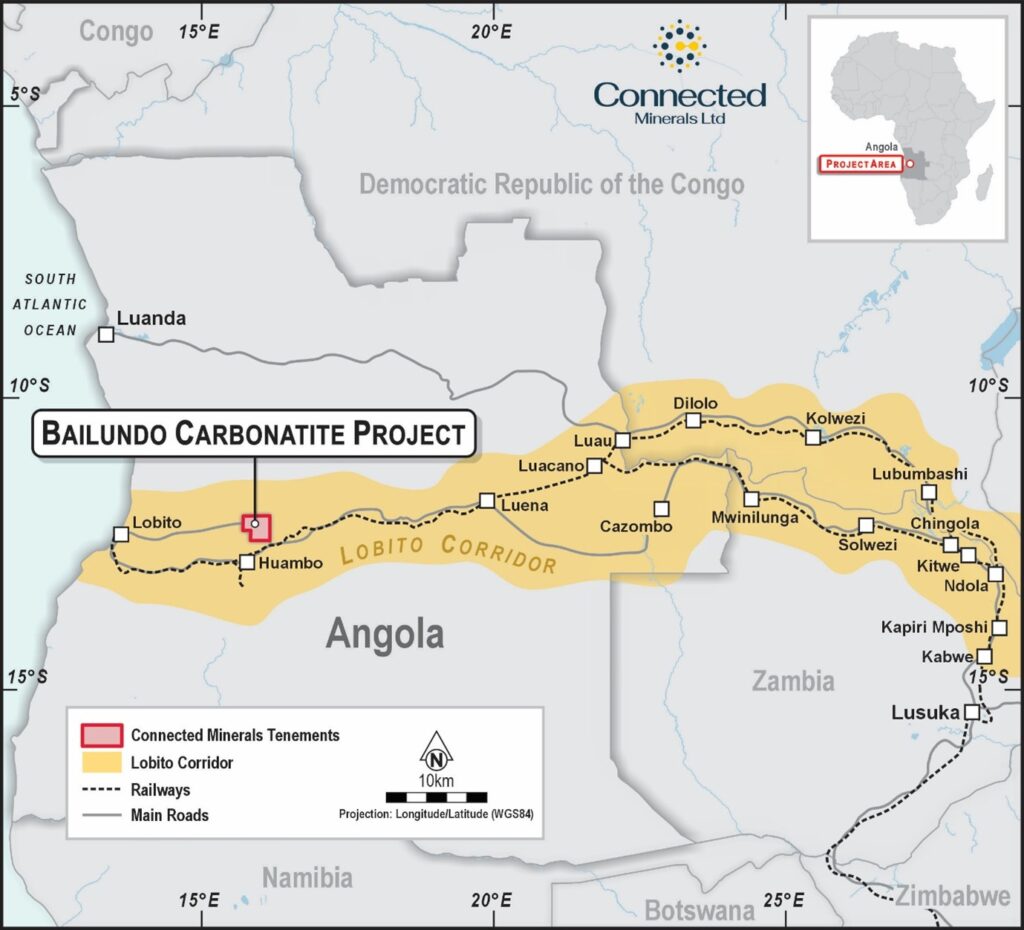
The Bailundo Niobium and REE Project is situated in Huambo province, in the central-western region of Angola. The Project is located 12km from the provincial town of Bailundo and 80km from Angola’s third largest city, Huambo.
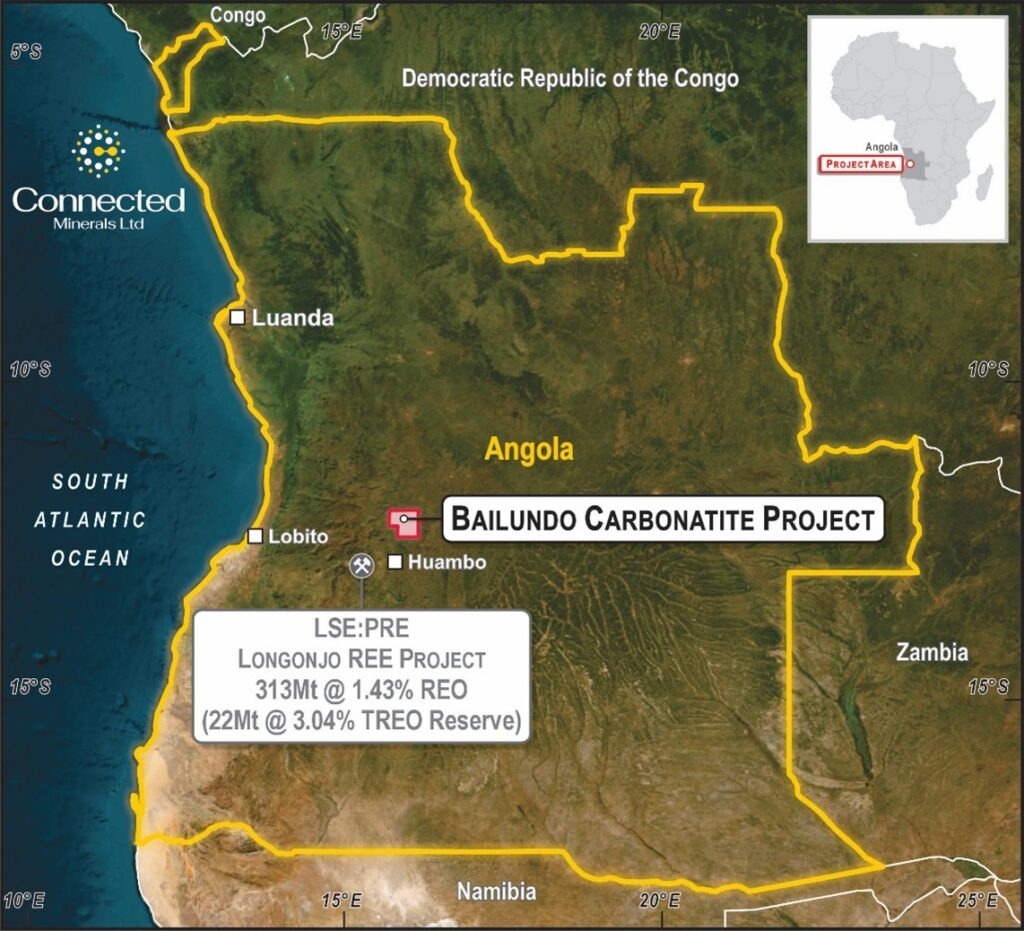
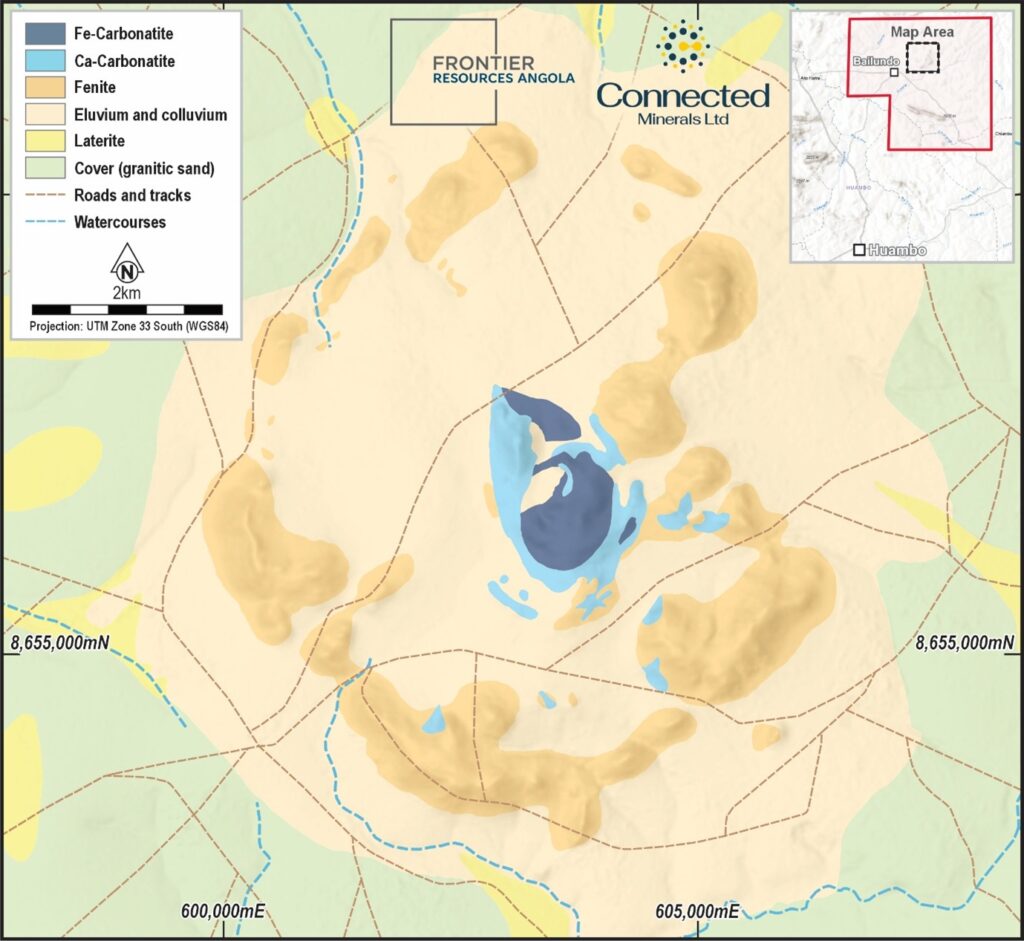
Bailundo covers 2,054km2 and contains a 7km diameter well-mapped carbonatite complex and is connected to the strategic Lobito Atlantic Railway corridor via sealed roads, with power supply infrastructure and transmission lines reaching the base of the Project.
Geology
The Project is located within the Lucapa Graben, a major tectonic corridor associated with alkaline and carbonatite intrusions formed during the breakup of Gondwana.
The mineralisation at Bailundo is associated with:
- Pyrochlore (niobium-bearing mineral)
- Rare earth element-bearing phases, including phosphates (rhabdophane group and monazite) and fluorocarbonates (parisite, bastnäsite and synchysite)
- Strong weathering enrichment within saprolite
Following Connected’s acquisition of Frontier Group CRM Ltd in 2026, it owns 80% of Bailundo.
Angola
Angola contains an abundance of untapped natural resources, however the Country has historically relied on oil and diamonds. The Government has implemented new reforms, incentives and transparency initiatives to attract foreign investment to assist with the diversification of the mining sector. Significant investment too has been made in infrastructure modernization, such as with the Lobito Corridor (>USD$12b Export-Import Bank of United States loan commitment).
Angola boasts a strategic geopolitical location and has formed strategic partnerships with both the US and EU. The Country was admitted to the EITI (Extractive Industries Transparency Initiative, a Norwegian-based organisation that seeks to establish a global standard for the governance of oil, gas and mineral resources) in June 2022 and is recognised by the Fraser Institute as Africa’s second most improved jurisdiction for mining, attracting majors to the mining sector including Anglo American, Rio Tinto, De Beers and Ivanhoe.
Geology – mirrored to Brazil
Carbonatites globally host the majority of the world’s niobium resources and are increasingly important sources of rare earth elements. Comparable systems in Brazil represent the world’s largest niobium deposits, supporting the geological prospectivity of the region.
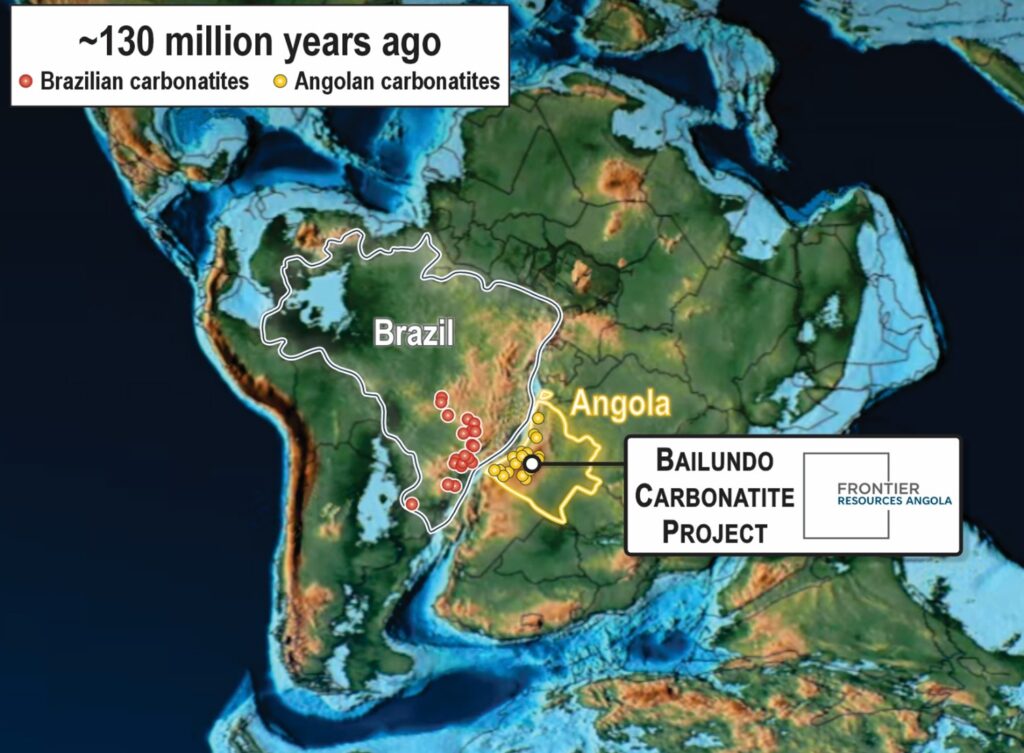
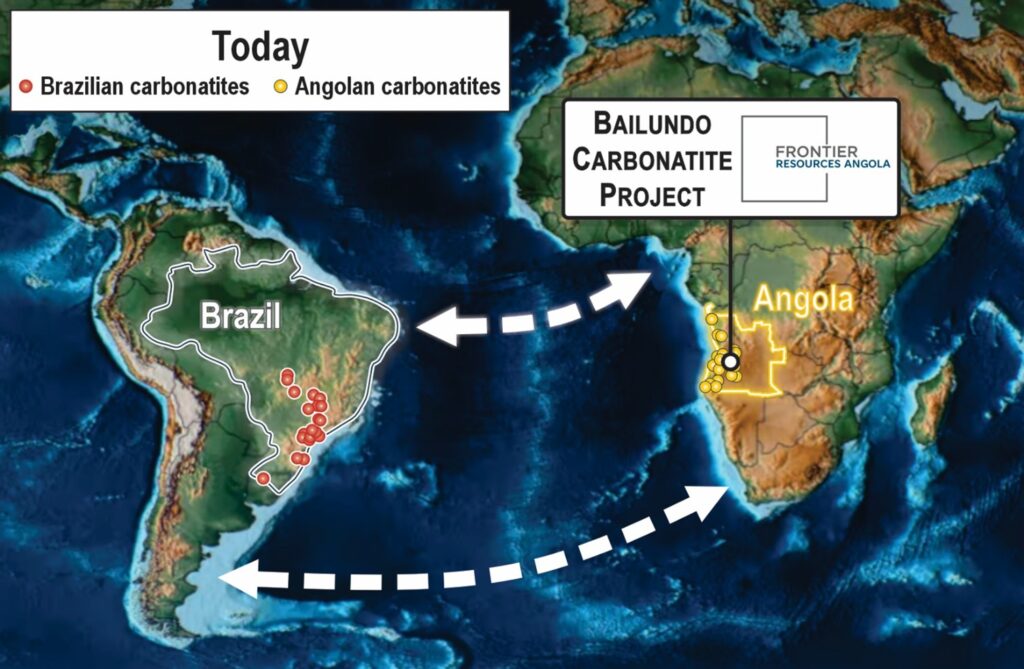
Brazil & Angola were connected prior to the break-up of Pangea (~130 million years ago) and present mirrored geological features including rock formations, mineral belts and development of sedimentary basements.
Brazil hosts some of the world’s largest carbonatite complexes, responsible for ~87% of the global production of Nb.
Angola’s world class deposits host significant carbonatite complexes known to be mineralised with both Nb & REEs and are geochemically and petrologically comparable to their Brazilian counterparts.